

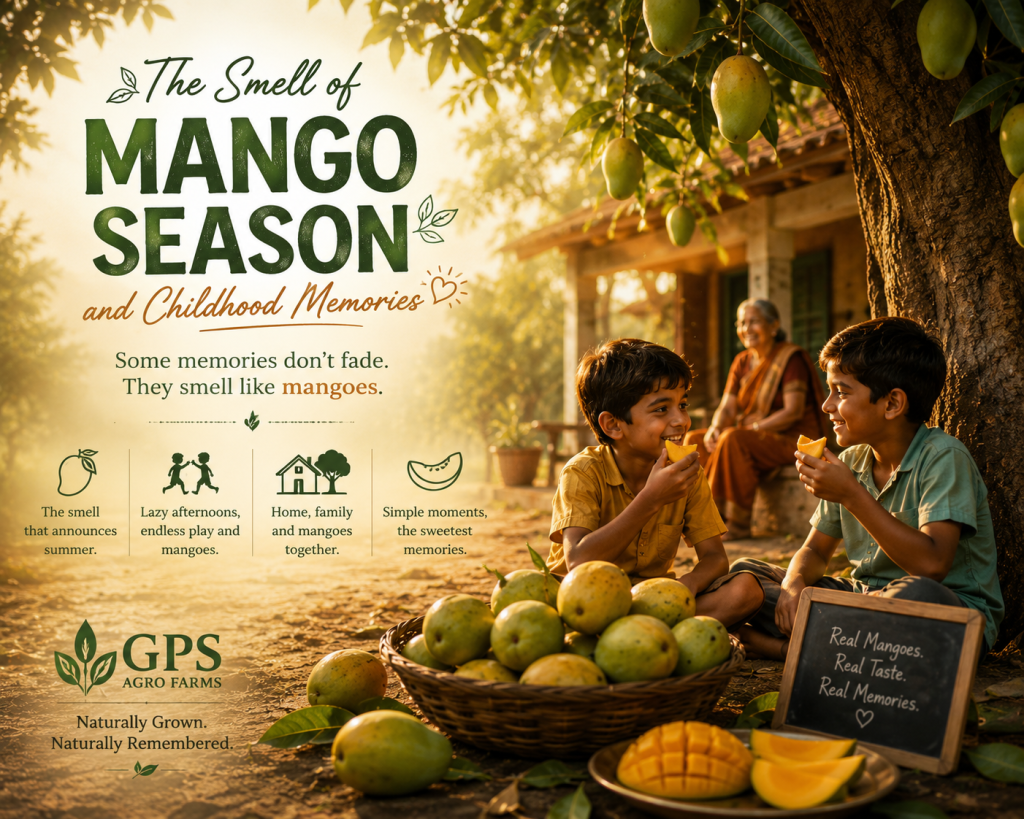
There is something magical about mango season.
Before the first fruit is even tasted, the season announces itself through its fragrance — a sweet, warm aroma carried by summer winds, filling homes, streets, markets, and memories.
For many of us, the smell of mangoes is not just about fruit.
It is about childhood.
It is the smell of summer holidays, family gatherings, laughter under trees, sticky hands, and carefree afternoons that seemed endless.
The Arrival of Summer
As children, we never needed calendars to know summer had arrived.
The first sign was always the scent of mangoes.
It drifted through kitchens where baskets of raw mangoes waited to ripen.
It filled verandas lined with hay-covered fruits.
It traveled through orchards glowing under the golden summer sun.
That smell carried excitement.
Because mango season meant:
- No school mornings
- Visits to grandparents’ homes
- Climbing trees
- Family lunches
- Evening walks through farms
- Freshly sliced mangoes shared with cousins
Summer felt slower, simpler, and sweeter.
Mangoes That Brought Families Together
In many Indian homes, mango season was never just about eating fruit.
It became a family ritual.
Parents carefully selected mangoes from local farmers.
Grandmothers checked ripeness by touch and aroma.
Children impatiently waited for mangoes hidden inside rice baskets or hay stacks to ripen naturally.
And once ready, the feast began.
Some mangoes were sliced neatly.
Some were squeezed and eaten directly.
Some became milkshakes, pickles, or desserts.
Every home had its own mango traditions.
Yet the most unforgettable part was always the smell — rich, natural, and impossible to forget.
The Difference Between Then and Now
Today, life moves faster.
Many children grow up surrounded by screens instead of orchards.
Fruits arrive polished, packaged, and artificially ripened.
The authentic aroma of naturally ripened mangoes is becoming rare.
But one naturally grown mango can instantly bring back memories:
- Sitting under a tree with grandparents
- Running barefoot through fields
- Sharing mango slices with siblings
- Summer afternoons filled with laughter
A single smell can travel decades.
Why Naturally Ripened Mangoes Smell Different
The unforgettable aroma of childhood mangoes came from natural ripening.
When mangoes ripen slowly on the tree or naturally after harvest:
- Sugars develop gradually
- Aroma compounds mature fully
- Flavor becomes richer
- Texture improves naturally
Artificially ripened mangoes may look attractive, but they rarely carry the same deep fragrance and emotional connection.
The smell of a naturally ripened mango is nature’s signature.
Mango Farms and Emotional Connection
For farmers, mango season is emotional too.
Every flowering branch carries hope.
Every harvest reflects months of care.
And every satisfied customer becomes part of the journey.
At farms like GPS Agro Farms, the focus goes beyond growing fruits.
It is about preserving authenticity — the real aroma, taste, and experience of mango season.
Because mangoes are not just products.
They are memories passed from one generation to another.
More Than a Fruit
The smell of mango season reminds us of something modern life often forgets:
joy can be simple.
A ripe mango on a summer afternoon.
A family gathered together.
The scent of nature filling the air.
Sometimes, the sweetest memories are not created by luxury —
they are created by moments we never realized would become memories.
Final Thoughts
Long after summer ends, the smell of mangoes stays with us.
It lives quietly inside childhood stories, old family homes, village visits, and moments of happiness that never truly fade.
Every mango season becomes a bridge between the past and present.
And perhaps that is why mangoes are loved so deeply —
because they do not just feed us.
They remind us who we were.

