

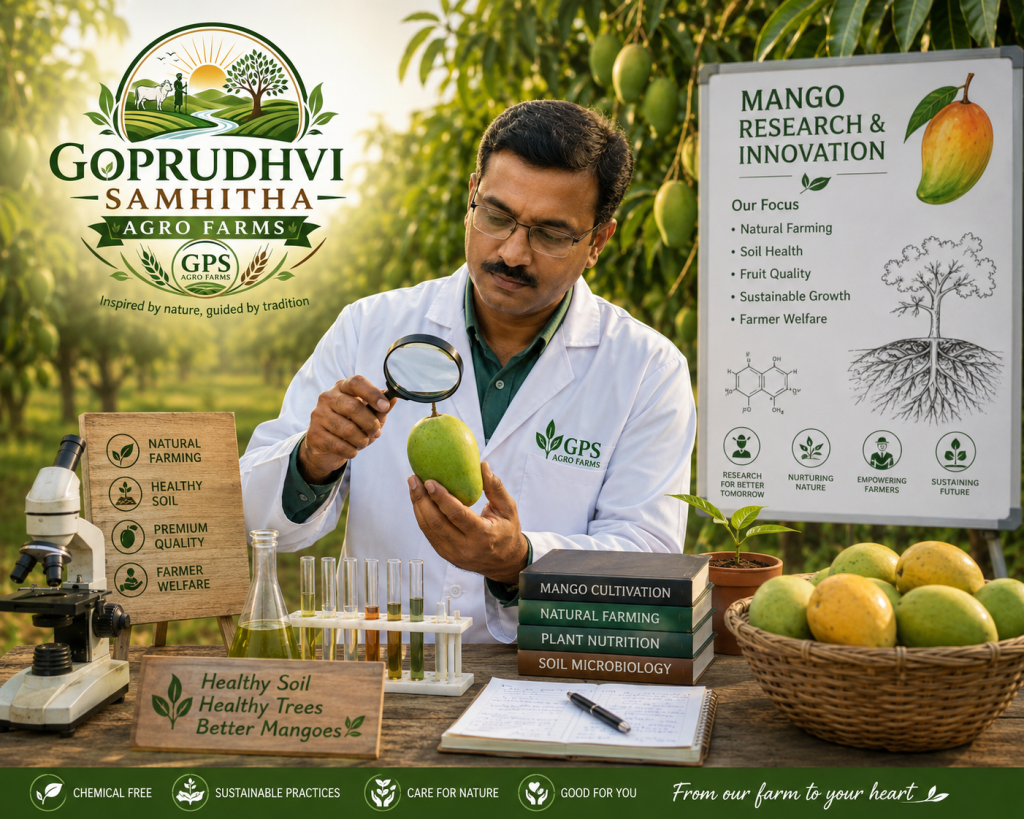
Behind every sweet, naturally ripened mango lies months of dedication, patience, and guidance. While farmers work tirelessly in orchards, there is often an unsung hero supporting them — the agricultural expert who helps farmers cultivate mangoes naturally and sustainably.
These experts are not just advisors. They are mentors, scientists, problem-solvers, and guardians of healthy farming practices.
Bridging Traditional Wisdom and Modern Knowledge
Natural mango farming is not simply about avoiding chemicals. It requires deep understanding of:
- Soil health
- Tree nutrition
- Water management
- Pest control
- Climate patterns
- Fruit development
Experienced agricultural experts help farmers combine traditional farming wisdom with modern scientific understanding.
They teach farmers how nature itself can become the strongest support system for healthy orchards.
Guiding Farmers Toward Chemical-Free Cultivation
Many mango farmers today are moving toward safer and more sustainable farming methods. However, transitioning away from chemical dependency can be challenging.
This is where natural farming experts make a huge difference.
They guide farmers in:
- Preparing Jeevamrutham and natural formulations
- Improving microbial activity in soil
- Using mulching for moisture retention
- Managing pests through natural methods
- Reducing unnecessary chemical sprays
- Encouraging biodiversity inside orchards
The goal is not just better mangoes — but healthier land for future generations.
Understanding the Mango Tree Like a Living System
An expert in natural mango farming understands that every tree behaves differently.
Some trees require:
- Better pruning
- Nutrient balancing
- Water stress management
- Flowering support
- Disease prevention
Rather than treating symptoms alone, experts study the entire ecosystem surrounding the orchard.
Healthy roots create healthy trees.
Healthy trees produce flavorful mangoes.
Helping Farmers Improve Mango Taste Naturally
The sweetness, aroma, texture, and shelf life of mangoes are heavily influenced by farming practices.
Natural farming experts help farmers improve:
- Fruit maturity
- Natural sweetness
- Aroma development
- Color quality
- Pulp density
without artificial ripening or excessive chemical intervention.
The result is mangoes that carry authentic farm-fresh flavor.
Building Farmer Confidence
One of the biggest contributions of these experts is confidence-building.
Farmers often face:
- Climate uncertainty
- Pest outbreaks
- Market pressure
- Rising cultivation costs
Natural farming advisors encourage farmers to think long term rather than chasing short-term results through heavy chemical use.
They help farmers believe that sustainable farming is both possible and profitable.
More Than Agriculture — A Mission
For many experts, natural farming is not just a profession. It is a mission to:
- Protect soil fertility
- Improve human health
- Preserve traditional farming knowledge
- Reduce environmental damage
- Support farming communities
Every naturally grown mango becomes proof that agriculture and nature can work together in harmony.
The Human Connection Behind Every Mango
Consumers often see only the final fruit. But behind every mango are countless hands and years of learning.
The farmer nurtures the tree.
The expert guides the process.
Nature completes the miracle.
Together, they create mangoes that are not only delicious but also healthier and more sustainable.
Final Thoughts
Natural mango farming succeeds when knowledge meets passion.
Experts who support farmers in sustainable cultivation play a crucial role in transforming agriculture into something healthier, more responsible, and deeply connected to nature.
Their work may happen quietly inside orchards, but its impact reaches every family enjoying safe, naturally grown mangoes.
Because the true taste of a mango begins long before harvest — it begins with care, wisdom, and respect for the land.

